
Creating a digital portfolio has become essential for students, job seekers, freelancers, and professionals who want to showcase their skills and accomplishments online. With powerful scanning and document management features, CamScanner provides one of the easiest and most efficient ways to build a high-quality digital portfolio directly from your smartphone.
This SEO-optimized guide walks you through how to create a polished, organized, and shareable digital portfolio using CamScanner—perfect for academic submissions, job applications, or professional branding.
What Is a Digital Portfolio? (Definition + Importance)
A digital portfolio is a curated collection of digital documents—such as certificates, project reports, resumes, artwork, and professional samples—that highlight your experience and expertise.
Why a Digital Portfolio Matters
- Makes your achievements accessible anytime
- Enhances job and university applications
- Boosts professional credibility
- Allows easy updates and long-term storage
- Simplifies sharing with employers, clients, or institutions
Digital portfolios are cleaner, more organized, and far more versatile than traditional paper folders.
Why Choose CamScanner for Creating a Digital Portfolio?
CamScanner is one of the most powerful mobile scanning apps, widely used for creating professional-quality documents. It is especially effective for digital portfolios because it combines scanning, editing, organizing, PDF conversion, and cloud sharing in one platform.
Top Reasons to Use CamScanner for Portfolios
- High-resolution scanning for crisp, clear documents
- Auto-enhancement tools to fix lighting, contrast, and clarity
- PDF creation and merging capabilities
- Folder management and tagging for easy organization
- Cross-device syncing for effortless editing
- Secure sharing via email, cloud links, or password-protected files
These features make CamScanner a time-saving, beginner-friendly tool for building a professional digital portfolio.
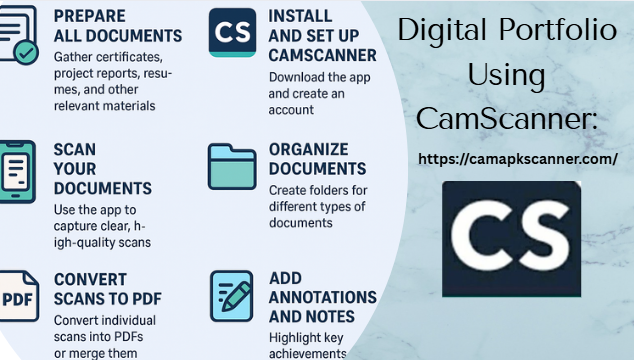
How to Create a Digital Portfolio Using CamScanner (Step-by-Step Process)
Step 1: Prepare All Documents for Your Portfolio
Before scanning, gather and organize everything you want to include. Proper preparation ensures a clean, structured digital portfolio.
Documents Typically Added to a Digital Portfolio
- Certificates and awards
- Academic assignments or project reports
- Work samples for employers or clients
- Designs, photographs, or artwork
- Research papers and case studies
- Resumes, cover letters, and recommendation letters
Sort items by category, importance, or timeline.
Step 2: Install and Set Up CamScanner on Your Device
Download the CamScanner app from your device’s app store and create a free or premium account. Setting up the app correctly will streamline the entire portfolio-building process.
Initial Setup Tips
- Explore scan modes (Single, Batch, ID Scan, etc.)
- Create folders labeled “Certificates”, “Projects”, “Academic Work”, etc.
- Turn on cloud sync for auto-backups
- Enable HD scan and auto-cropping options
The better your setup, the smoother your workflow.
Step 3: Scan Your Documents with CamScanner (Professional Quality)
Clear, sharp scans are essential for a professional digital portfolio. CamScanner’s built-in tools help you capture clean documents with minimal effort.
Best Practices for High-Quality Scans
- Use bright, diffuse lighting to avoid reflections
- Hold your phone steady or use a flat surface
- Align pages properly within the camera frame
- Utilize auto-edge detection
- Apply enhancement filters (Magic Color, B&W, Auto)
- Crop out backgrounds for a clean presentation
Well-scanned documents greatly improve visual impact and readability.
Step 4: Organize Your Files into Folders in CamScanner
A messy portfolio can harm your credibility. CamScanner’s folder and tagging system helps maintain a clear structure.
Organization Strategy
- Create separate folders for major categories
- Use consistent naming conventions like:
- Certificate_CourseName_2024
- Project_Report_App_Development
- Add tags such as “Academic,” “Professional,” “Design,” etc.
This structure helps employers or institutions navigate your portfolio quickly.
Step 5: Convert Scanned Documents to PDF Format
PDF is the most professional and widely accepted format for digital portfolios.
PDF Options in CamScanner
- Save each scan individually as a PDF
- Merge multiple pages into one PDF file
- Reorder pages for a logical sequence
- Compress PDFs to reduce file size
A well-organized PDF portfolio leaves a stronger impression on reviewers.
Step 6: Add Notes, Highlights, and Watermarks
Enhancing your scanned files makes your digital portfolio more meaningful and engaging.
Useful Annotations
- Highlight achievements or important text
- Add descriptions below documents or images
- Insert a signature or custom watermark
- Add page titles or labels
These small details help communicate your value more effectively.
Step 7: Share Your Digital Portfolio from CamScanner
Once your portfolio is ready, CamScanner lets you share documents instantly.
Sharing Methods
- Email PDFs directly
- Generate secure cloud links
- Save to Google Drive, Dropbox, OneDrive, or iCloud
- Export to your computer for offline distribution
Always review sharing permissions to maintain security.
Advanced Tips for Optimizing Your Digital Portfolio (SEO + Professional Impact)
1. Use Clear, SEO-Friendly Document Titles
Use keywords relevant to your field. Examples:
- Graphic_Design_Portfolio_2025.pdf
- Data_Analysis_Certificates_Professional.pdf
- Mechanical_Engineering_Project_Reports.pdf
This helps if you upload your portfolio online or attach it to job applications.
2. Maintain a Clean and Consistent Layout
- Keep categories separate
- Avoid clutter
- Use readable fonts and clear labels
Professional presentation increases your credibility.
3. Update Your Portfolio Regularly
Add new certificates, remove outdated items, and refresh your main PDF every few months.
4. Keep File Sizes Small and Easy to Load
Use CamScanner’s compression tools to avoid heavy PDFs that take too long to open.
Common Mistakes to Avoid When Creating a Digital Portfolio
- Blurry or poorly lit scans
- Disorganized folders and file names
- Oversized PDF files
- Missing certificates or work samples
- No explanations or annotations
- Using inconsistent formats or fonts
Avoiding these mistakes will keep your portfolio polished and professional.
Using CamScanner Across Multiple Devices
Because CamScanner syncs in real-time, you can update your portfolio from any device.
Benefits
- Access your documents anytime
- Edit files on mobile, tablet, or desktop
- Automatic updates across all platforms
- Reliable cloud backup
Perfect for students and professionals constantly on the move.
Enhancing Your Portfolio with Visuals and Multimedia
Although CamScanner focuses on documents, you can still add multimedia elements to enrich your portfolio.
What You Can Include
- Photos of projects or artwork
- Screenshots of digital work
- Infographics or diagrams
- Links to video demos or live projects
These elements make your portfolio stand out visually.
Conclusion: Build a Professional Digital Portfolio with CamScanner
Creating a digital portfolio using CamScanner is one of the fastest and most effective ways to showcase your work professionally. With powerful scanning, editing, organizing, and sharing tools, CamScanner helps you build a clean, organized, and visually appealing portfolio that is suitable for students, job seekers, and professionals alike.
By following this guide, you can create a standout digital portfolio that highlights your achievements and leaves a lasting impression on employers, universities, or clients.
FAQs About Creating a Digital Portfolio with CamScanner
Q1: Can I create a digital portfolio for free using CamScanner?
Yes. The free version includes scanning, organizing, PDF creation, and sharing.
Q2: What is the best file format for a portfolio?
PDF is the most recommended format due to its professional appearance and cross-device compatibility.
Q3: Can I include multimedia files in my portfolio?
While CamScanner doesn’t support embedding video, you can add screenshots or insert external links.
Q4: How can I protect sensitive documents in my portfolio?
Use password-protected PDFs and control access via share permissions.
Q5: Is CamScanner suitable for students and professionals?
Absolutely—its versatile features are perfect for academic, creative, and professional portfolios.